Another year, another collection of projects, mishaps, and late-night debugging sessions. But 2025 wasn’t just another year of tinkering - it was the year I shipped a real hardware product to paying customers around the world.
The Big One: ESP32 Rainbow Goes Live
If you’d asked me in early 2024 what my biggest achievement would be in 2025, “successfully completing a crowdfunding campaign” wouldn’t have been on the list. But here we are.
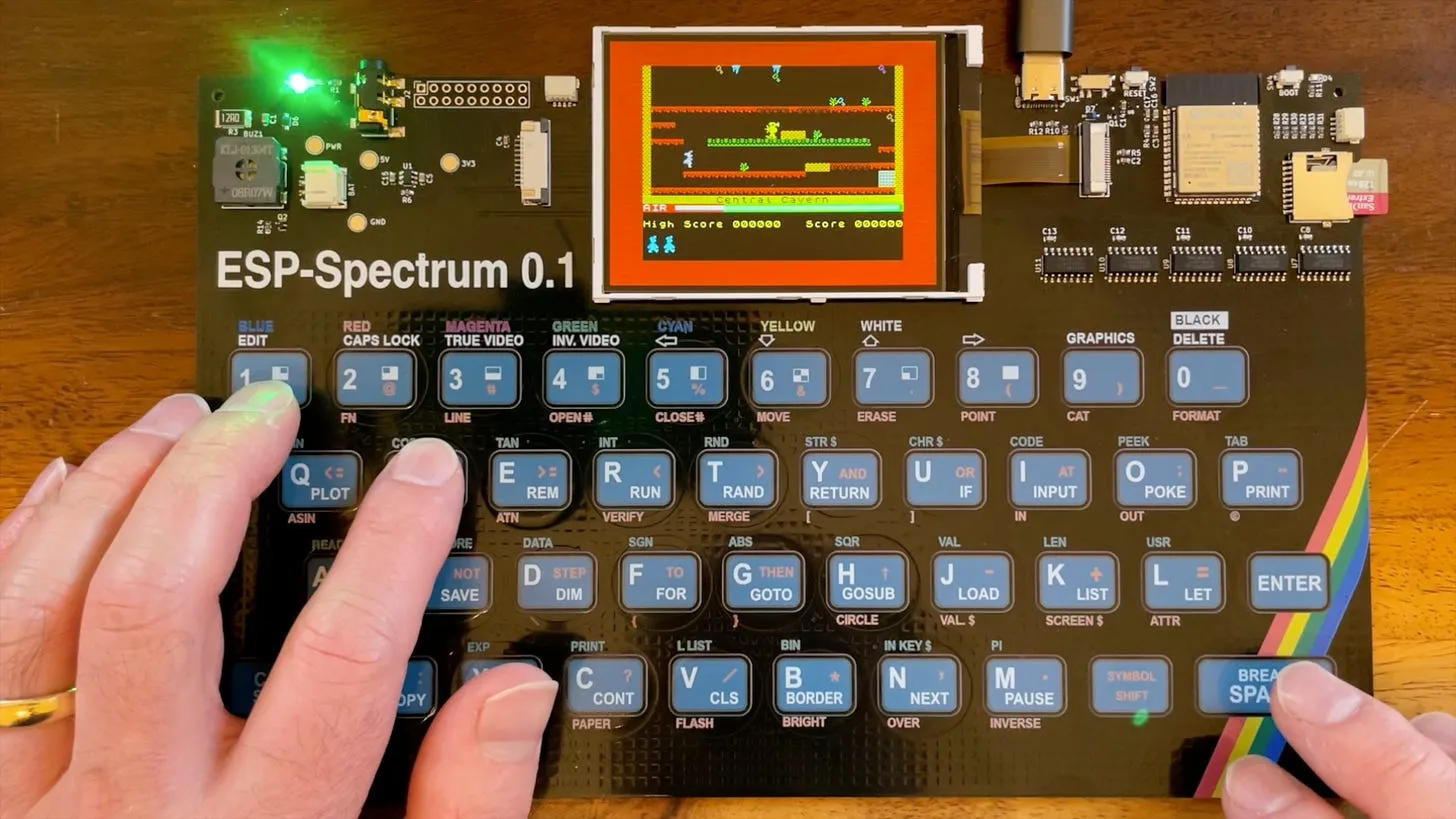
What is the ESP32 Rainbow?
It’s a recreation of the iconic Sinclair Spectrum, but with modern internals: an ESP32-S3 brain, full-color UV silk screen printing, capacitive touch keys, and a built-in display and speaker.
The Journey: 13 Months from Idea to Shipping
- June 2024: The idea sparked - what if we could do full-color silk screen on a PCB?
- November 2024: Campaign launched on Crowd Supply
- December 2024: Hit 146% funding - 118 backers plus a crucial 118-unit house order
- January 2025: Funds received, production started
- July 2025: All orders shipped to backers worldwide
- Novemebr 2025: Follow-up order deliverd to Mouser deliverd (100 additional units)
- December 2025: Additional follow-up order sent to production (40 additional units)
The Numbers
Let’s pull back the curtain on what a “successful” crowdfunding campaign actually looks like:
- Total Revenue: £12,839.57
- Cost of Goods Sold: £8,565.66 (for 280 sellable units)
- Gross Profit: £4,273.91
- Labor Hours: 436 hours (that’s 54 eight-hour days)
- True Profit After Labor: -£1,049.65 (or +£1,000.35 if remaining stock sells)
Not exactly retirement money, but that was never the point.
The Real Challenges
Pricing: Wanted to charge £49.99 (very Clive Sinclair), but the economics forced £99. Bottom-up pricing (£30.60 COGS + margin) met top-down pricing (what people would pay) somewhere in the middle.
Certification: £506.05 for CE/UKCA certification. Turns out selling to consumers requires actual compliance, even if you’re using a pre-certified module. Thanks to Smander’s Simple Start service for making this painless.
Tariffs: The specter of Trump’s tariff talk loomed large. Shipping everything to the US as DDP (Delivered Duty Paid) meant I paid import duties. Fortunately, I could argue UK Country of Origin, but that was pure luck.
International Shipping: A month-long odyssey of mysterious tracking pages, support tickets, and boxes that wouldn’t move. If you’re shipping from the UK, get yourself an EORI number before you start.
What did I learn?
This project taught me:
- Crowd funded hardware prices aren’t a rip-off - there are real costs behind every product
- Building an audience before launch is crucial (thanks YouTube/blog/newsletter)
- AI tooling made the impossible possible (emscripten? no way without AI help)
- Open source builds community - people love your terrible code
- Working with a distributor (Crowd Supply/Mouser) handles complexity but eats margin
Would I do it again? Maybe. With a very compelling idea and a large customer base. But for now, the ESP32 Rainbow is real, it’s shipping, and there’s a community forming around it. That’s the achievement.
Other 2025 Highlights
While the ESP32 Rainbow dominated the year, there were plenty of other projects worth mentioning:
🔌 High Voltage Adventures
What started with failed LED lightbulbs turned into a series of high-voltage experiments. Salvaged LED filaments, 800V DC-DC converters with spectacular failures, and eventually a $2 board generating 787V. The pinnacle was a 27V Joule thief running from a CR2025 coin cell, eventually becoming a drop-in replacement for broken Bistable Choldesteric writing tablet.
🎵 The 10¢ Microcontroller Series
The CH32V003 RISC-V chip costs ten cents. Ten. Cents. With 16K flash and 2K RAM, it shouldn’t be capable of much. But it turns out you can:
- Play polyphonic music on a piezo buzzer powered by a coin cell
- Perform brain surgery on Halloween toys to make them scream
- Synthesize speech using 2-bit ADPCM and LPC
All running on deep sleep drawing just 7µA between beeps. The future is ridiculously cheap.
🐛 Escaping Printf Hell
After years of Serial.println("Here 1") and blinking LEDs, I finally embraced proper debugging. The ESP32-S3’s built-in USB/JTAG support means you can set breakpoints, inspect variables, and use conditional debugging right in the Arduino IDE. The Six Stages of Debugging post captures the journey from “That can’t happen” to “How did this ever work?”
Bonus discovery: That serial baud rate number does nothing on ESP32-S3 with native USB. It’s actually running at 7MB/s, not 115200.
🛠️ Repairs, Teardowns, and Bodge Wires
- Oops I Did It Again: Mixed up common anode vs cathode LEDs, requiring creative bodge wire repairs
- Red Arcade Thing: Diagnosed and fixed a dodgy AliExpress handheld with a failed voltage regulator
- Bistable Cholesteric Display: Teardown of an LCD writing tablet, discovering it needs 27V to clear
🤖 AI-Assisted Hardware Development
Two experiments with AI generating hardware:
- Vibe-coded one-button keyboard: ESP32-S3 mechanical keyboard with AI-assisted firmware
- Atopile-generated dev board: Claude AI selected components and generated schematics
Surprisingly not terrible.
🌐 Web Serial Plotter
Forget the Arduino Serial Plotter - this browser-based version offers real-time graphing, zoom, export, and a signal generator. No installation required.
2025 By The Numbers
- 26 blog posts (plus this one)
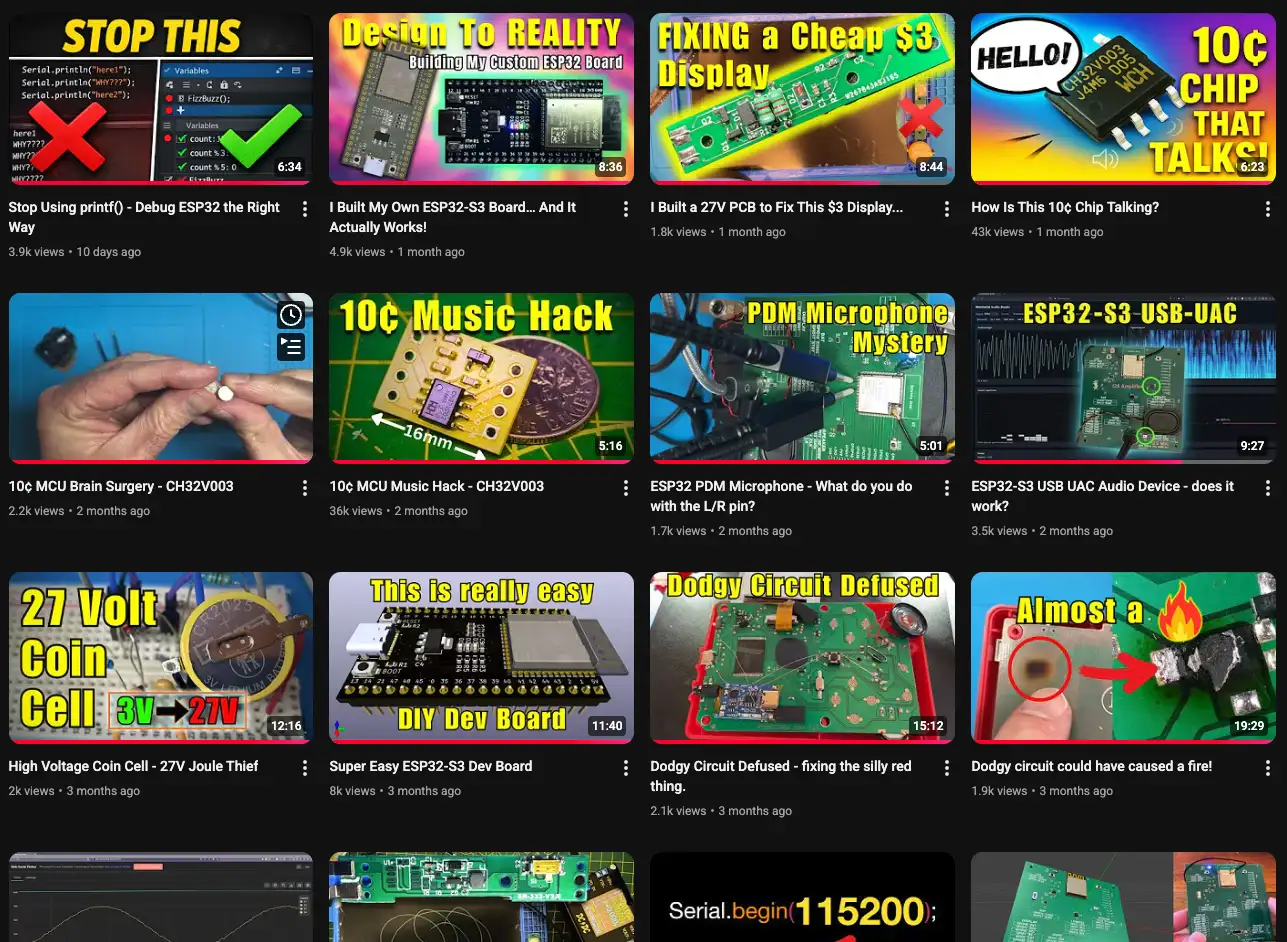
- 32 YouTube videos
- Busiest months: August, September, October
- Top topics: ESP32/ESP32-S3 (14), High Voltage (6), CH32V003 (4), Repairs (6), PCB Design (5)
- 1 successful crowdfunding campaign ✅
Looking Forward to 2026
2025 proved that one person can still build real hardware products and ship them worldwide. The economics are brutal, the challenges are real, but the satisfaction of seeing your creation in the wild makes it worthwhile.
For 2026? More ESP32 experiments, more ridiculous high-voltage projects, and probably more bodge wires than I’d like to admit. The ESP32 Rainbow continues to be available on Crowd Supply - I’ve had to do two follow up production runs - so keep on ordering!
But the biggest lesson from 2025 wasn’t about hardware or firmware or certification. It was this: build things that bring joy, share your process (even the failures), and don’t be afraid to show your terrible code. The community that forms around that honesty is worth more than any profit margin.
Here’s to 2026. Let’s see what catches fire next.
Want to follow along with future projects? Subscribe on YouTube, Substack, or grab the RSS feed from this blog.