🌈 ESP32-S3 Rainbow: ZX Spectrum Emulator Board! Get it on Crowd Supply →
View All Posts
read
Want to keep up to date with the latest posts and videos? Subscribe to the newsletter
HELP SUPPORT MY WORK: If you're feeling flush then please stop by Patreon Or you can make a one off donation via ko-fi

A while back, I tried to power my Christmas lights using solar power, but it didn’t work out as planned - there simply wasn’t enough daylight (and more importantly sunlight) to charge up the battery.

Undeterred, I decided to see if I could power my low-energy ePaper weather display using the not-so-strong Scottish winter sun. The weather display is super energy-efficient, thanks to the ESP32’s deep sleep mode. With a 1000mAh battery, it can last up to 2-3 months without recharging. My goal? Extend that battery life even more with some solar power - maybe even keep it running indefinitely…

If you prefer to watch a video, you can do so here.

The Challenge

The biggest issue with solar power up here in Scotland is the short days and weak sun. When I was playing with solar power before it was very rare to get more than the 4 volts that the TP4056 charging board needs to run. And to actually fully charge a lithium cell, we would need more than 4.2 volts.
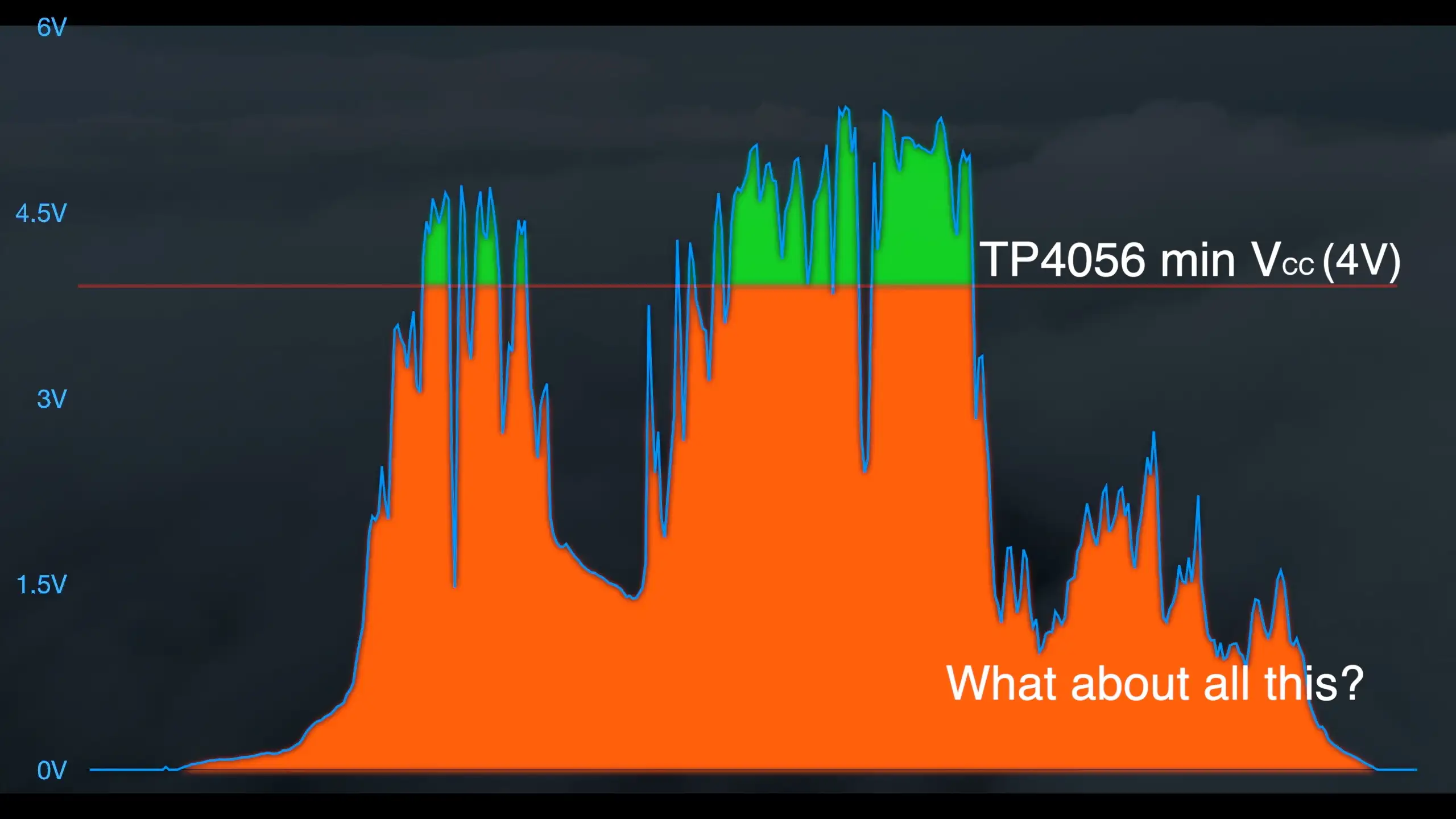
Available Power

However, the ePaper weather display is amazingly power efficient. It spends almost all its time in deep sleep and the realy nice thing about ePaper displays is that they use zero power once the display has been set up. I measured the current draw of the weather display when it was in deep sleep and it was only 167uA. In theory the ESP32 can go down to 10uA so potentially there’s room for improvement here.
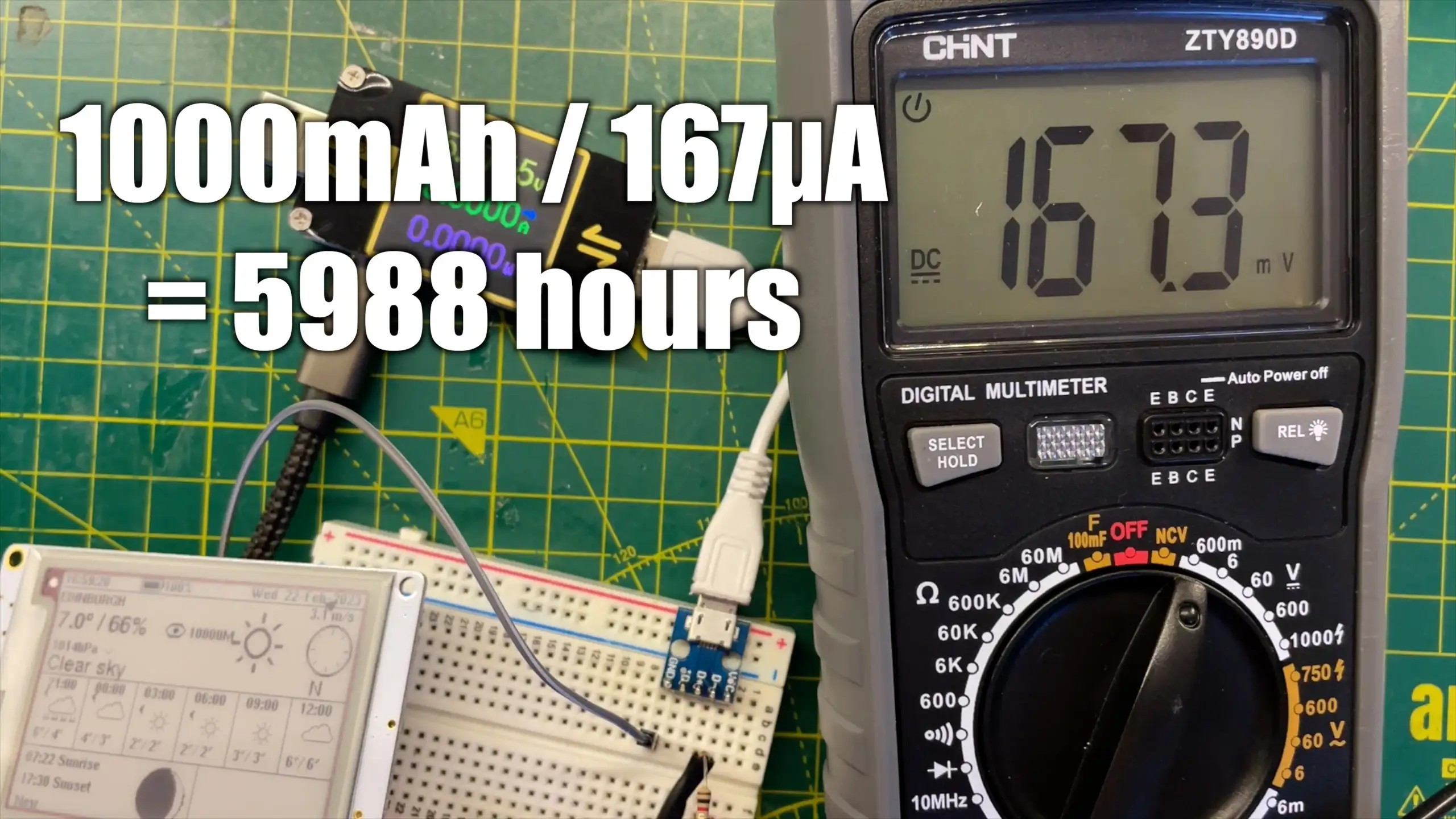
Power Usage

To get an idea of what I was dealing with I updated the code for the weather display so that it would send up the current battery level every time it woke up. This produced this slightly noisy graph. Looking at the slope the battery drains by about 2.2% every day.
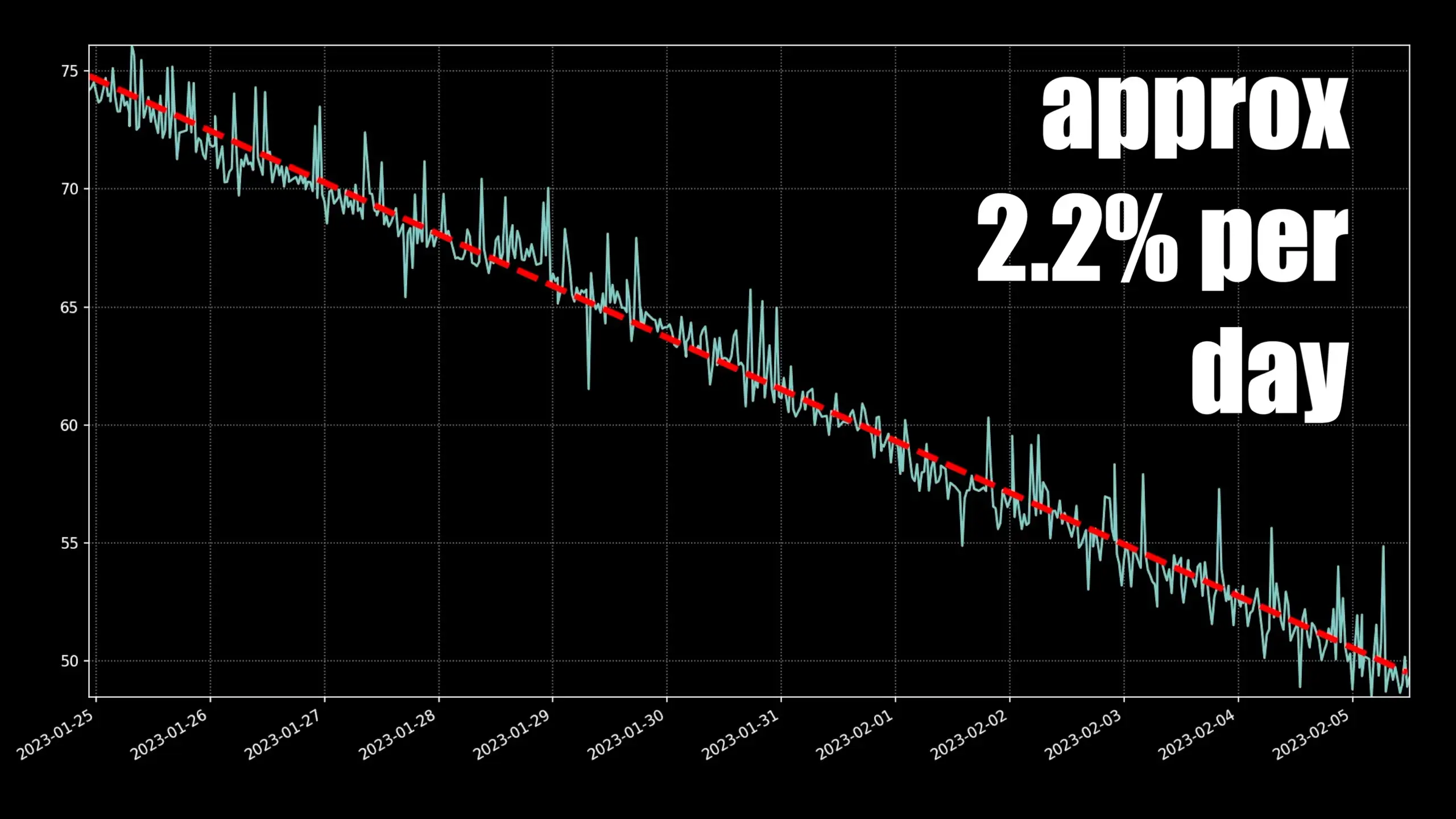
Battery Drain

Playing with BQ25504 and BQ25570 Boards

To get the most from the solar cell, I decided to try a bit of energy scavenging. I tested two energy-harvesting boards from AliExpress, the BQ25504 and BQ25570, to see if they could help keep my battery happy.
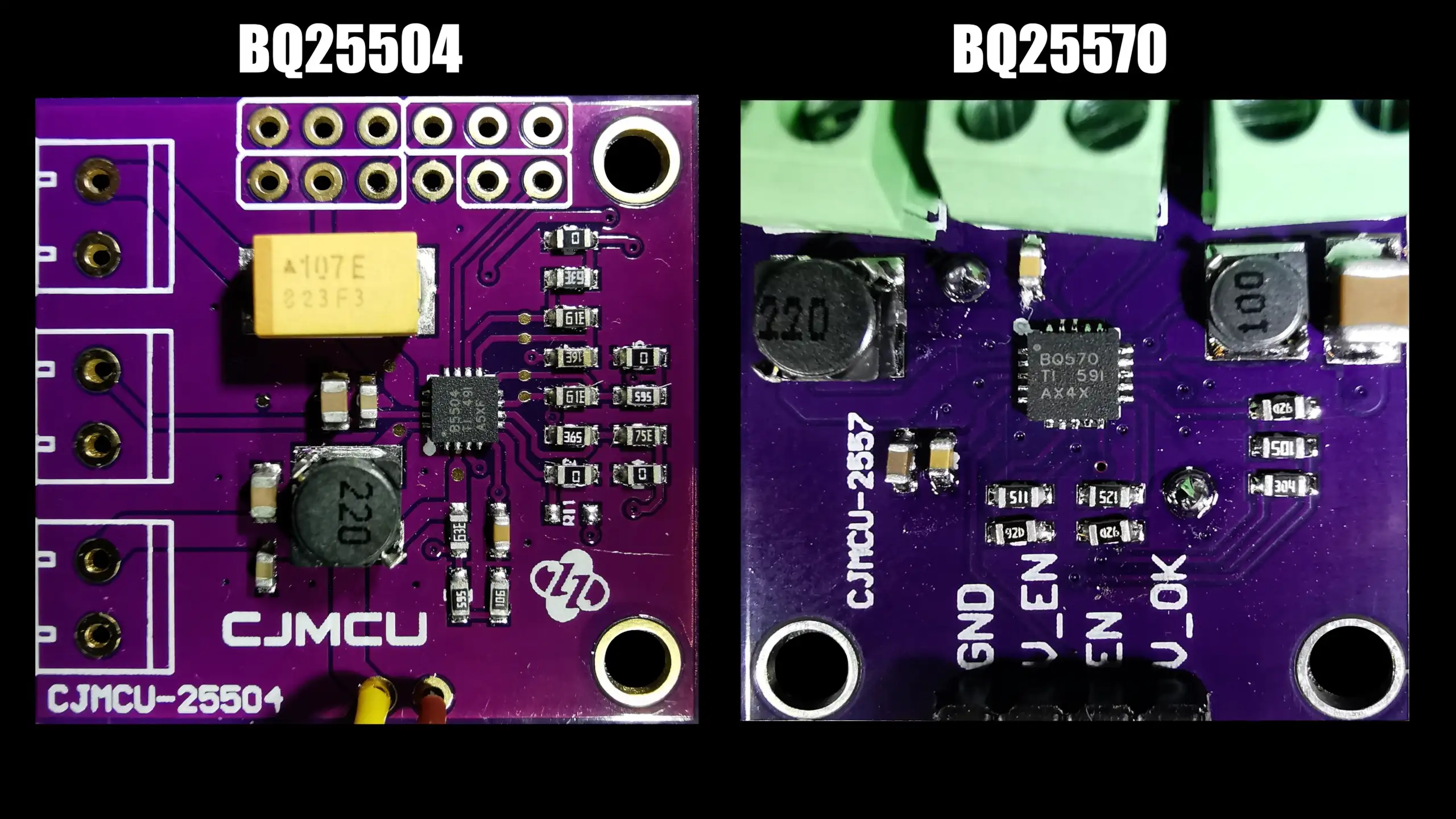
BQ25504 and BQ25570

Initially I wanted to use the BQ25504 as it’s a bit simpler than the BQ25570 which includes a buck regulated output for powering the load. My initial experiments were pretty promising, even with the solar panel outputting quite a low voltage the board was able to charge up the built in capacitor to a much higher voltage. Unfortunately, it maxed out at 3.172 volts which is not enough to charge a lithium cell.

The maximum voltage is controlled by a couple of resistors on the board.
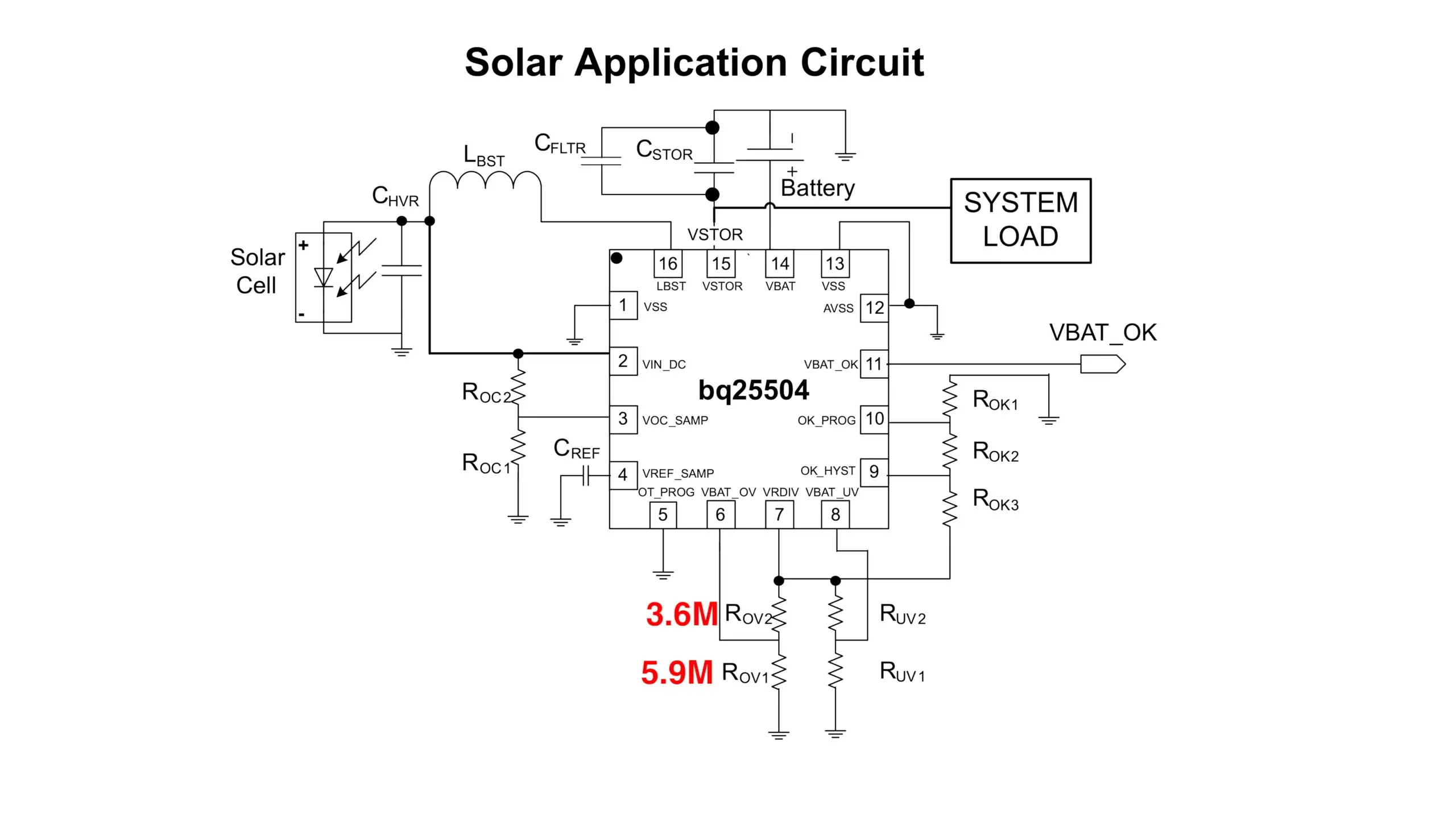
BQ25504 Schematic

And can be worked out using the formula:

\[VBAT\_OV=\frac{3}{2}VBIAS\left(1+\frac{R_{OV2}}{R_{OV1}}\right)\]

Where VBIAS is typically 1.25 volts.

I could have changed the resistors on the board to get the correct output voltage - but honestly, life is a bit too short to be messing around with these tiny components.
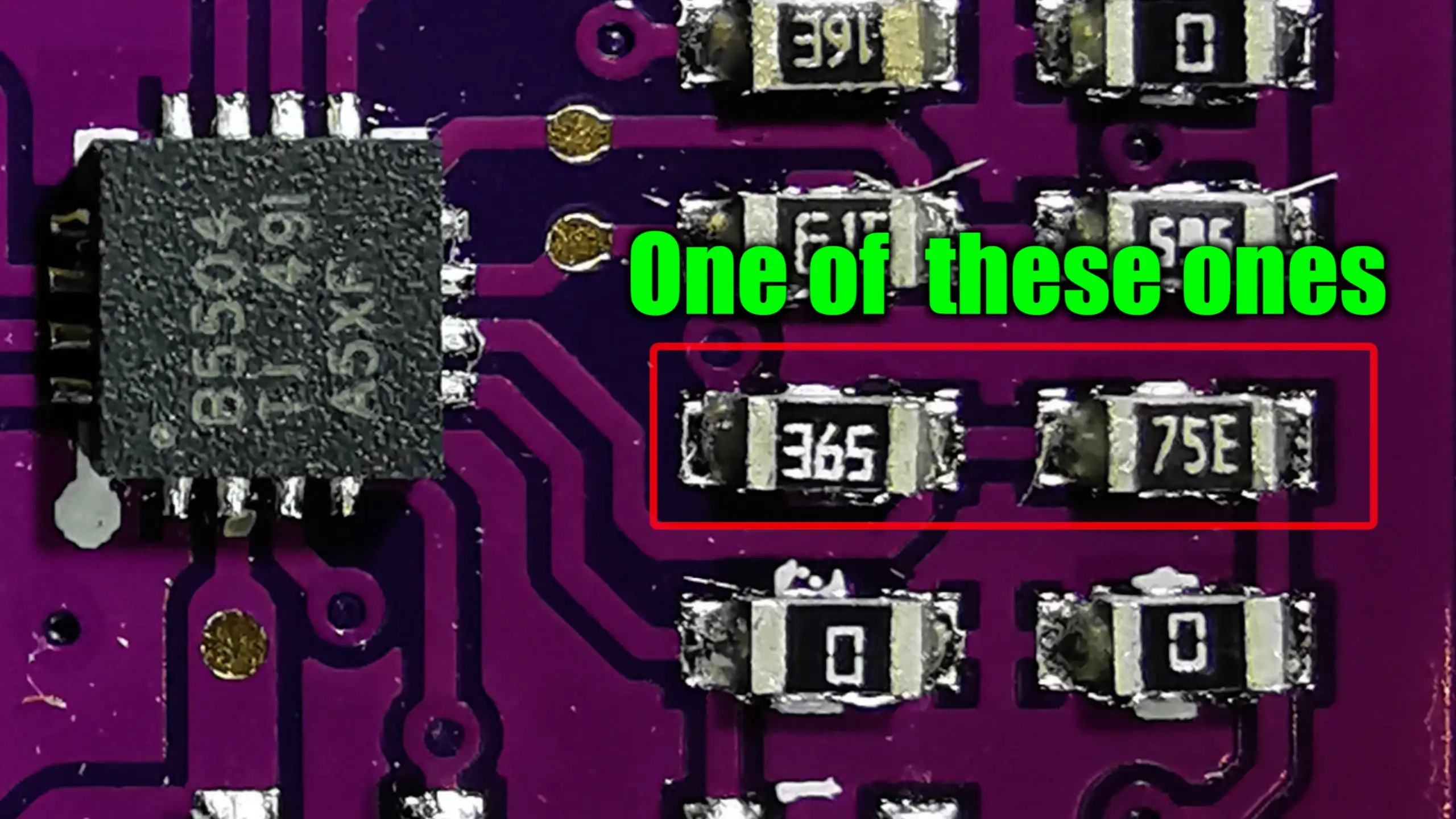
BQ25504 Resistors

After looking at the BQ25570 board I found that it was already set up with the right voltage levels.
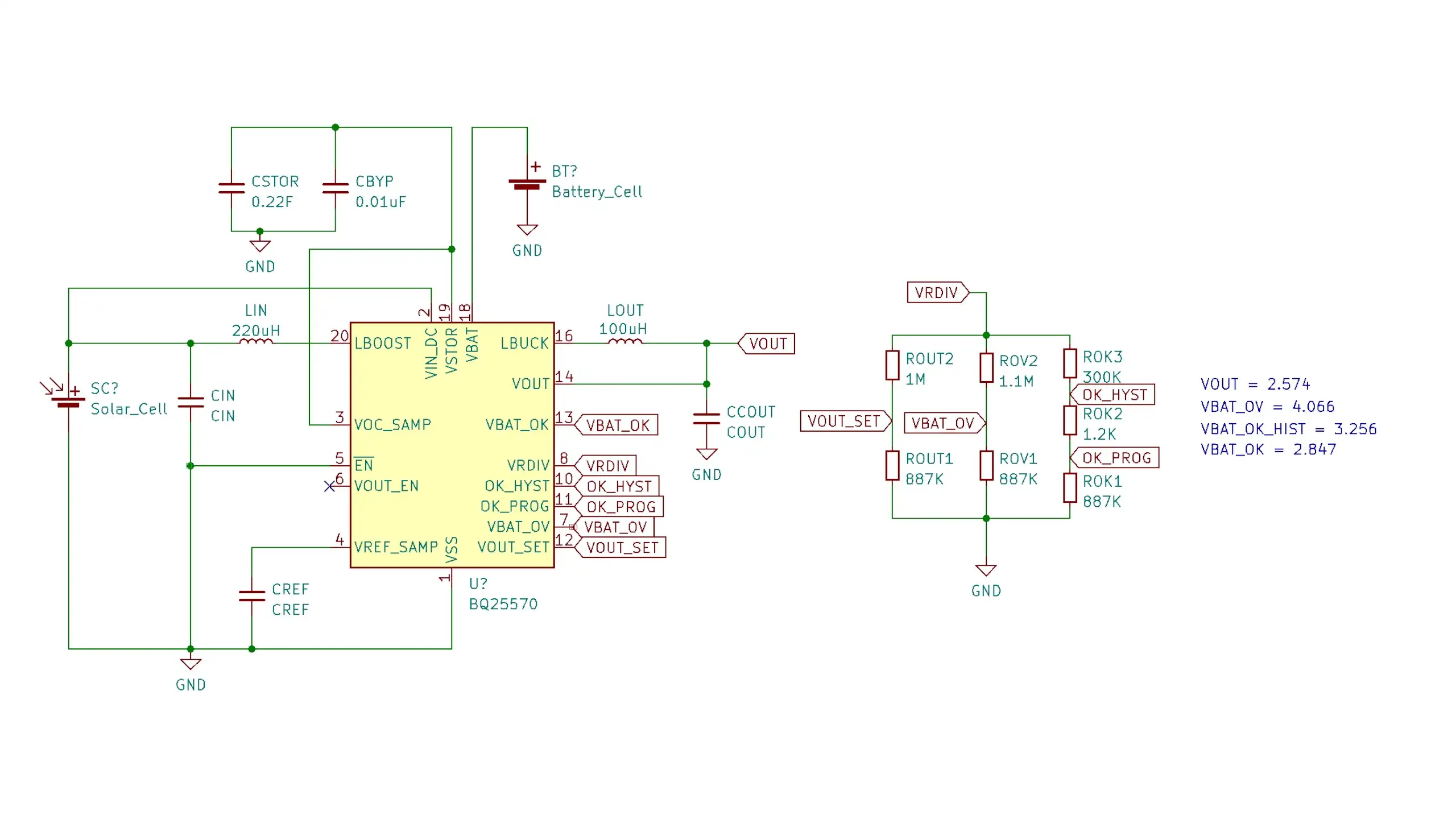
BQ@5570 Schematic

The BQ25570 board is a bit more complicated than the BQ25504, it includes a buck regulator that can be used to power the load - it’s quite nice as you can use the output of the VBAT_OK pin to enable and disable the buck regulator - so it will switch off the load if the battery voltage is too low. The buck regulator on my board was setup to output 2.5 volts. Initialy you might things this is too low to power an ESP32 which is typically run from 3.3 volts. But an ESP32 will actually run on anything between 2.3 and 3.6 volts.

Here’s my ESP32 dev board running the blink sketch off the buck regulator. It’s completely happy.
Blink Sketch

However, the buck regulator is limited to a maximum of 100mA. This is fine, unless you want to run WiFi, which is pretty important if you want to get a weather forecast. I checked how much current the ESP32 was drawing when it was refreshing the weather display and it has current spikes of 400-600mA.
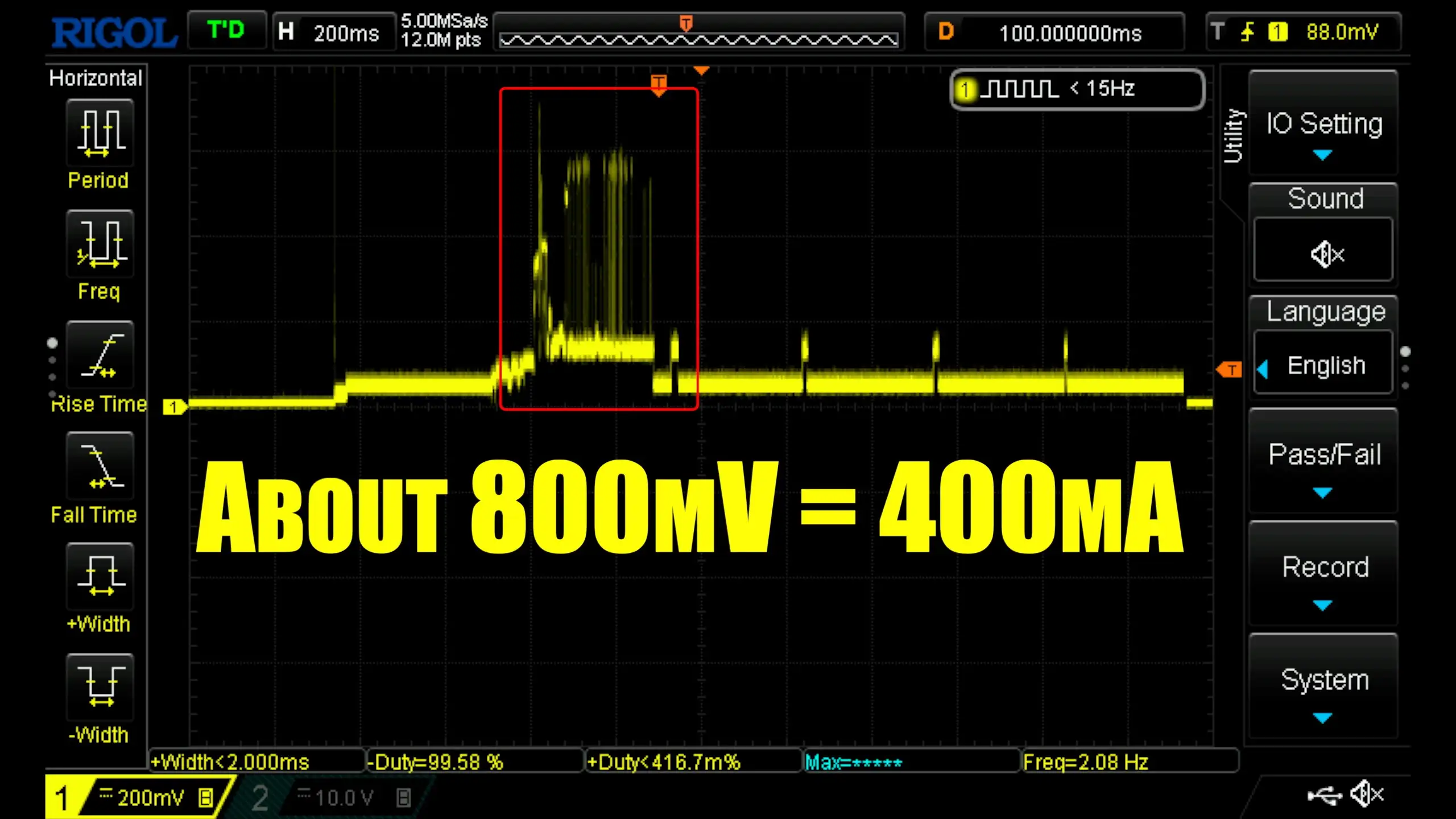
Current Spikes

Fortunately, we can just ignore the buck regulator and directly connect the weather display to the battery without any issues.

To check that the BQ25570 does actually work, I measured the battery level and left it on the window sill for a few hours. We actually got a small amount of sunshine and managed to charge the battery from 3.85 volts to 3.88 volts - now that doesn’t sound like very much, but if you map it onto a lithium cell discharge curve, it’s actually around 4-5% of the battery capacity (this has to be taken with a bit of salt as the battery discharge curve is very approximate).
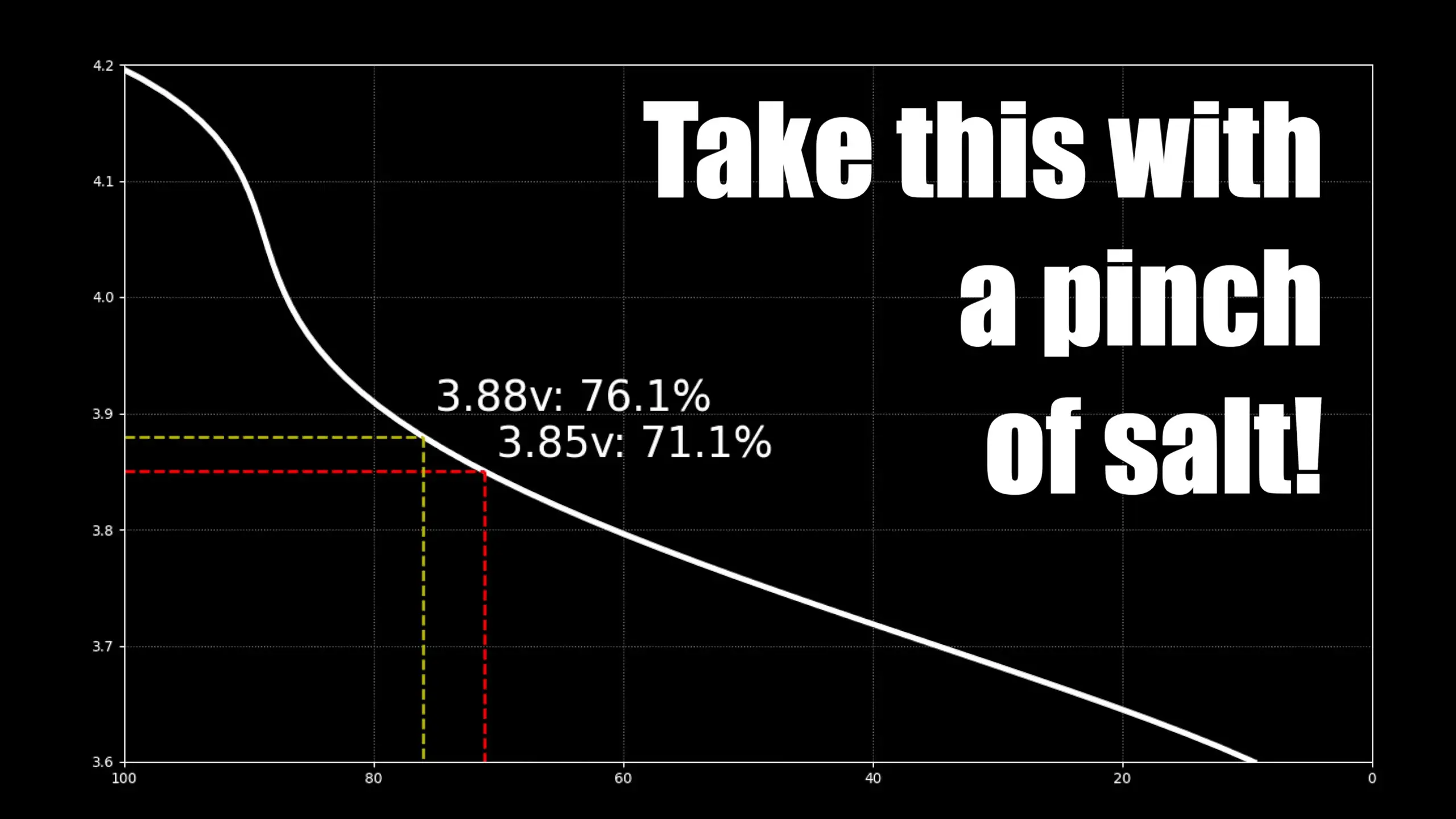
Battery Charging

Initial Results

I left this running for a week or so in the usual position for the weather display and got some pretty interesting results. I was initially pretty dissapointed, the battery was still draining over time. But, the drain was now only 1.4% per day. So despite the graph looking pretty bad - we did actually make some progress. The slope is now 1.4% per day, which is a lot better than the 2.2% per day we were seeing before.
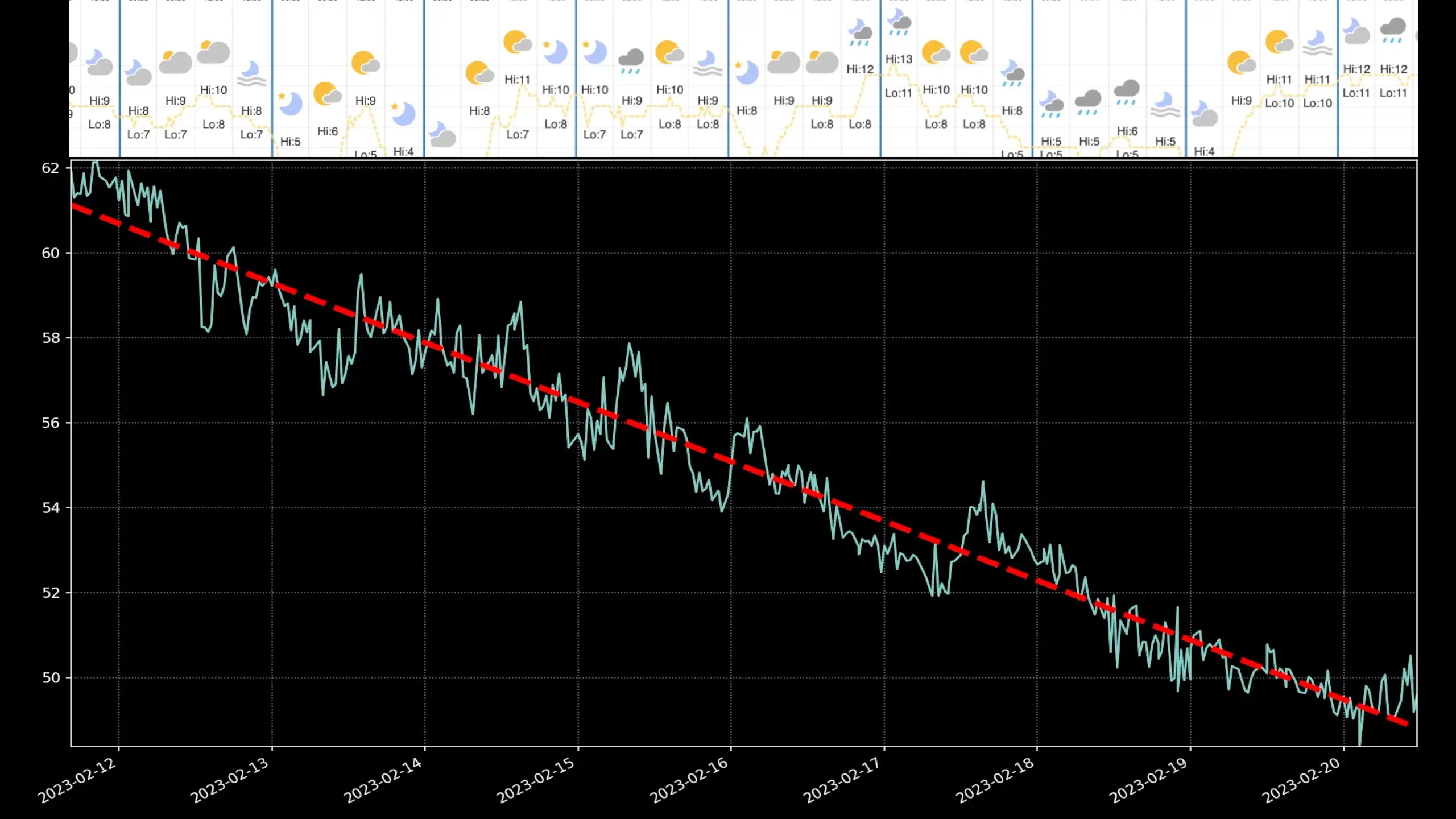
Battery Drain With Energy Scavenging

Making an obvious change

One smart idea to save battery life would be to let the weather display take a long nap overnight when everyone’s snoozing. I tweaked the code to make it deep sleep for 6 hours after 11pm and left the experiment running for a few weeks while I was away on holiday. The results are more promising. We still see the battery draining, but it’s now only 0.9% per day.
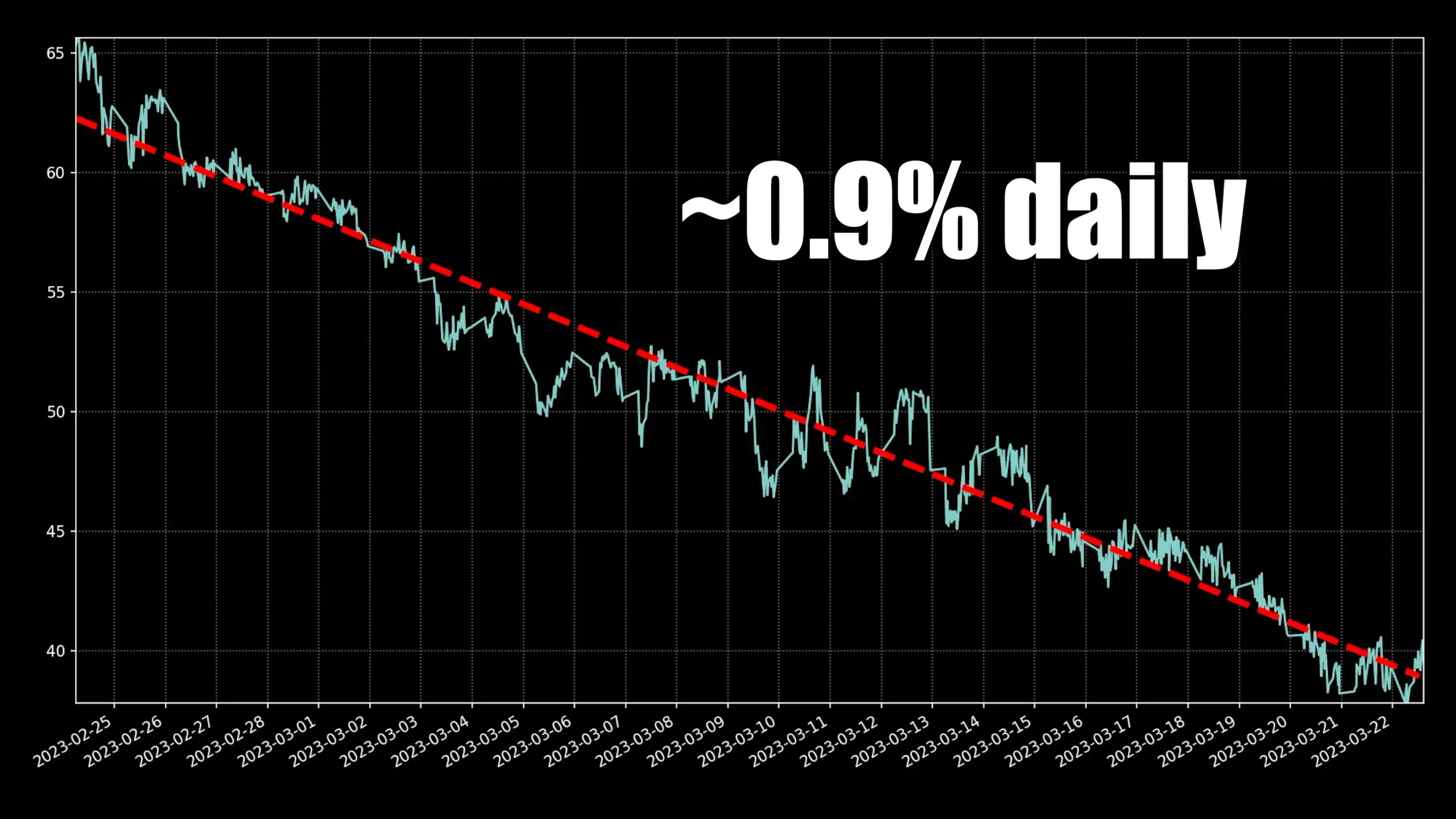
Battery Drain With Overnight Sleep

The Verdict

With this new code in place, I think that the battery could last through the winter months through to spring when the days start to get much longer. And I think during the summer months, the battery could get recharged up to 100%. I believe my weather display might just keep running forever and never need charging again.
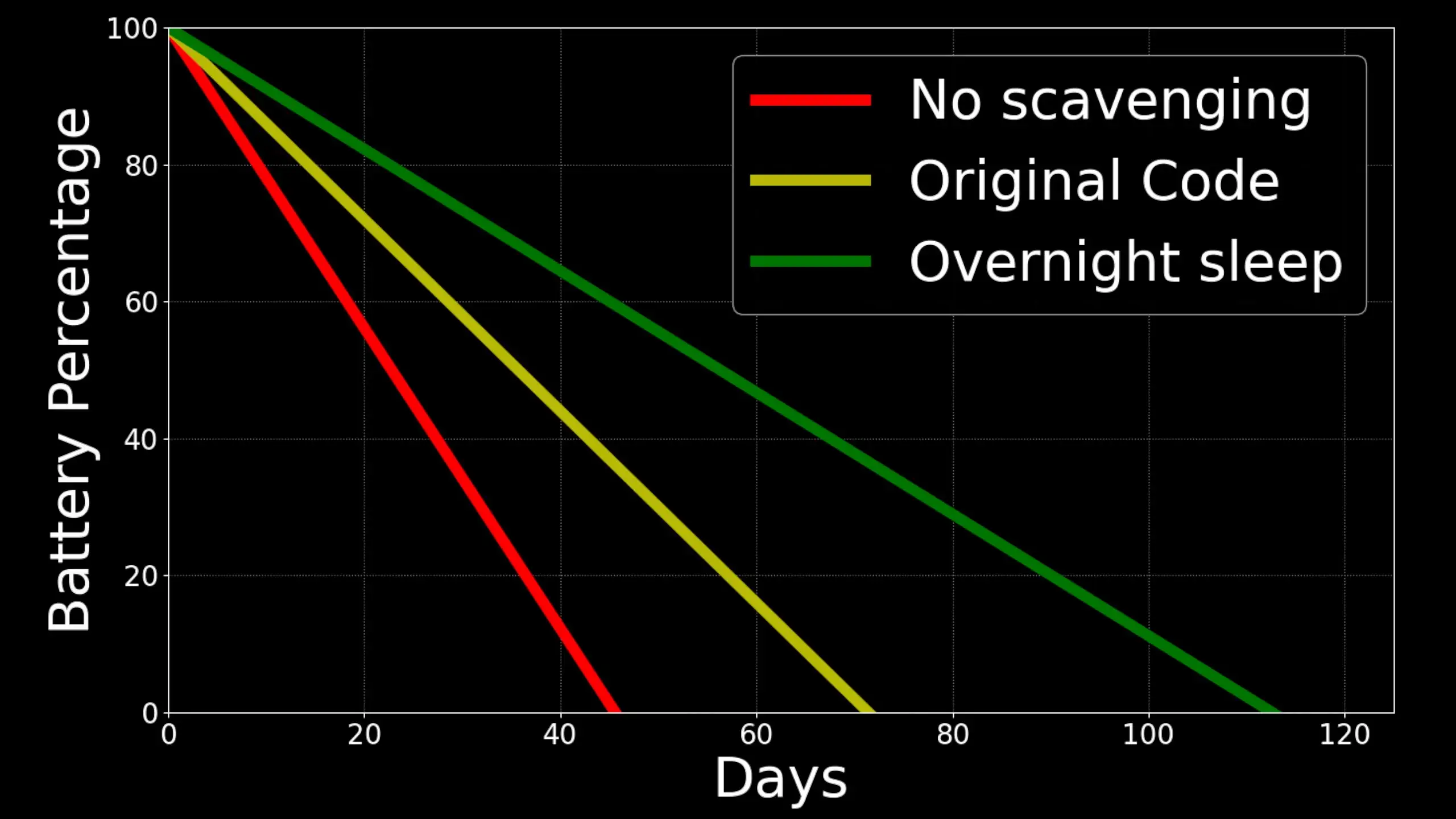
Results

The only issue now is that I need a new box to put it in - it’s a bit of a mess right now…
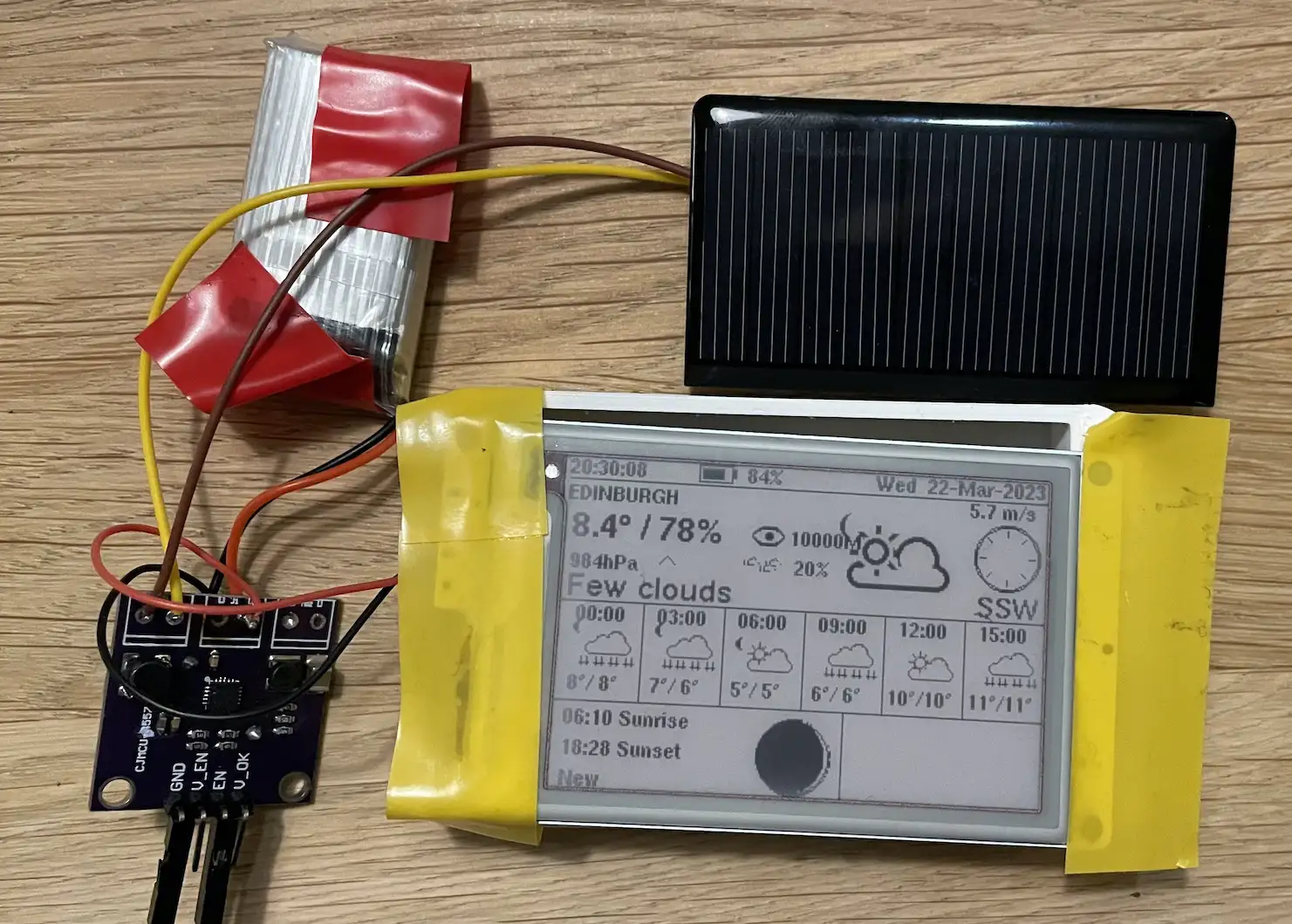
What a mess

Related Posts

I got this feeling bezos is watching - Discovered my Hue switch battery performance is correlated with room temperature after a nifty web scrape of Amazon's device usage history. While it's a given that batteries are temperature-sensitive, actual data from my own living room provided a neat confirmation, graphing a daily pattern. Wanted to go green with a rechargeable lithium coin cell, but the voltage risk to the ATmega256RFR2 on the PCB is a no-go. For now, it's back to the humdrum world of regular coin cells and unexciting battery charts. Dive into the video for a deeper geek-out on this!
75% Less Power! - Saving the Planet With Motion Sensing and Image Processing - In this blog, I was dealing with a conundrum on how to reduce the power consumption of my cool magic mirror that was always on, always drawing power. I considered options such as a PIR (Passive Infra Red) sensor and a doppler radar microwave motion sensor. The latter worked brilliantly except for a few too many false positives. Things got technologically fancy when I introduced a camera for motion detection and face recognition, even recognizing who is in front of the mirror! However, while it was fascinating, it upped the power consumption which was against our original goal. After combining everything into an impressive package and even forming simple state machine, I found that the sophisticated system needed more work. Conditions like lighting and screen turn-on time presented challenges. However, it did make a significant difference - nearly running at 25% of the original power consumption. Definitely a promising and interesting project worth looking into further!
More fun and games with high voltage - Hey everyone! I know it's been a while since the last video, but things have been crazy busy with shipping off the ESP32 Rainbows. Lately, I've been diving into the world of high voltage again. My last endeavor with a high voltage board led to some gnarly waveforms and flickering LEDs, so I tested with beefy resistors but wasn't thrilled with the results. Fortunately, I've found some nixie tube driver boards that work wonders with LEDs, providing smooth output with little ripple. Still, playing with the old boards has its thrill—hello, 787 volts and some wild sparks! Stay tuned for more high voltage adventures!
No Power? No Problem! A Wireless Pi Doom Machine - In my latest wireless charging experiments, I got my hands on a set of wireless charging PCBs and dove into testing different voltage inputs and their efficiency levels. It was interesting to realise that the 5V input managed to provide a decent efficiency of 73%, while 12V input struggled and heated the receiver board excessively. With the perks and limits of this setup explored, I took a whirl at creating a wireless Pi Doom machine. It worked like a charm! However, I quickly noticed the need to split charging and boost board into two different modules - a project to look forward to. Half the fun is getting there! Check out the video [here](https://youtu.be/glCIuOoFm7U) for more detail on the project.
More Updates on the ZX Spectrum Board - I'm gearing up for production with some updates to our prototype, including switching to a 4-layer board to improve EMI, and refining USB power filtering. Check out the video for a deep dive into our battery charger and an exciting expansion port for potential HDMI output. The main goal now is to get our boards ready for manufacturing and shipping through Crowd Supply!

Related Videos

Harvesting Solar Power for Low-Energy Electronics: Can We Run Forever on Scottish Winter Sun? - Discover an e-paper weather display experiment that uses solar energy and storage to achieve low-power functionality in the Scottish winter sun. The innovative project utilizes the ESP32's deep sleep mode and e-paper display to create an energy-efficient weather display device.
Can You REALLY Power Christmas Lights with Solar Panels in Winter!? - Find out if it's possible to power Christmas lights with solar energy during the Scottish winter, despite the short days and low sun. Discover how small solar panels can be used to charge a lithium cell and potentially provide a sustainable and eco-friendly option for your holiday decorations.
Did I Ruin These Night Lights? - I cracked open some cheap night lights and thought I’d improved them with a radar sensor—turns out, maybe not. With the Nordic Power Profiler, the stock board sips ~72 µA in ultra-sleep (~0.8 mA while monitoring, 80 mA with LEDs), but my radar mod idles around 2.8–3 mA and the LDR only gates the output, not the IC. That means ~12 days on an 820–850 mAh cell or ~30 days with 2000 mAh, while the original could hit ~200 days on 350 mAh if it would just trigger properly—so I’m going to investigate that.
787 Volts From a $2 Board! - Let's have some fun with high voltage experiments and LED filaments! I've been dabbling with 300-400 volts, testing out capacitor charging, and saving some flickery Philips bulbs. With a new ESP32 Rainbow project in the works and a nifty minimalist ESP32 S3 board arriving soon, there's lots going on. Despite some high ripple issues and quirky sounds from the modules, swapping to an old-school surface mount board provides smooth performance with almost no ripple. Join me as I explore the limits and potential projects with these LEDs. And for a shocking tidbit at the end, explore some high voltage calculations—it's electrifying!
Making this CR*P Night Light GOOD - I've been picking up cheap motion night lights—performance meh, battery life definitely not 'four charges a year'. So I cracked one open for a Big Clive-style reverse-engineer: TP4054 charger at ~300 mA into a tiny 350 mAh cell, an 8-pin mystery PIR/LED driver taking the PIR and LDR directly and sinking the LED cathodes. No visible current limiting on the board, but measured ~68 mA on the bench so it's baked into the chip. Then I gutted the brains, dropped in an RC-WL0516 radar sensor, added an LDR and a timing cap to stretch the ~3 s timeout, and drove the LEDs with a MOSFET and proper current limiting. Swapped in a bigger 820 mAh battery, reassembled so it still charges and looks stock—and now it actually works nicely. Also, bonus anti-subscribe jam. Good as new.
HELP SUPPORT MY WORK: If you're feeling flush then please stop by Patreon Or you can make a one off donation via ko-fi
Want to keep up to date with the latest posts and videos? Subscribe to the newsletter
Blog Logo

Chris Greening


Published

> Image

atomic14

A collection of slightly mad projects, instructive/educational videos, and generally interesting stuff. Building projects around the Arduino and ESP32 platforms - we'll be exploring AI, Computer Vision, Audio, 3D Printing - it may get a bit eclectic...

View All Posts