Guition JC3248W535 (3.5" ESP32-S3)
Also known as: JC3248W535 · JC3248W535EN · Guition 3.5 inch ESP32-S3 display
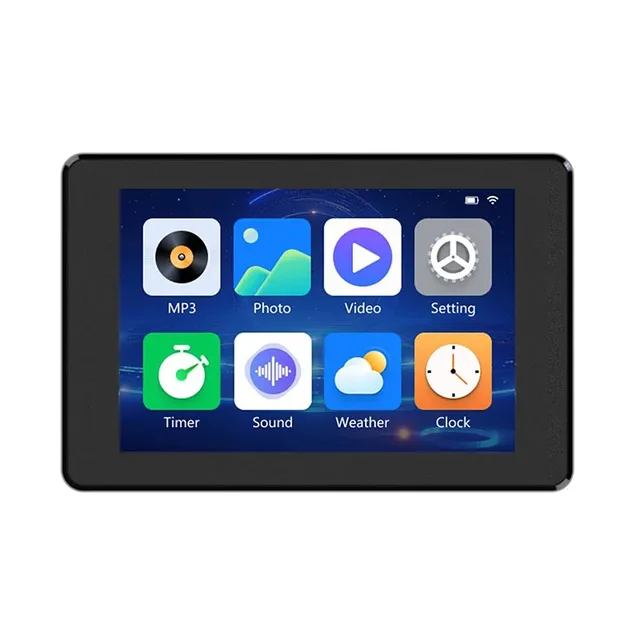
The 'better CYD': a 3.5" IPS with capacitive touch, an ESP32-S3 with 16MB flash / 8MB PSRAM and a battery-charge circuit, for barely more than the original resistive CYD. The QSPI display leaves real GPIO free.
As an Amazon Associate and an affiliate we may earn from qualifying purchases. Prices and availability are set by the retailer.
At a glance
⚑ flag an error| SoC | ESP32-S3 |
|---|---|
| Vendor | Guition (Shenzhen Jingcai) |
| Type | Display board |
| Memory | 16 MB flash · 8 MB PSRAM |
| Display | 3.5" 320x480 IPS (AXS15231B, QSPI bus), capacitive (integrated in AXS15231B, multi-point) touch |
| Connectivity | Wi-Fi, BLE 5 |
| USB | USB-C |
| Battery | Yes (onboard LiPo charging) |
| Free GPIO | ~12 (after display/touch/SD) |
| Onboard extras | battery, sd |
| Typical price | $11-18 (street, varies) |
Compare all ESP32 display boards in one table →
Good for
Works with
Firmware and UI-stack support, with a known-good starting point where one exists. "Community" means an unofficial but working config or port.
- ESPHome Official support config / port →
- LVGL / Arduino Community support config / port →
- openHASP In progress config / port →
Gotchas to know
- The AXS15231B QSPI panel only works in LVGL full-refresh mode (partial/direct render is broken), and there is no hardware rotation — plan for 0°/180° in software.
- TFT_eSPI can't drive QSPI panels; use Arduino_GFX 1.5.0+ or ESP-IDF esp_lcd.
- Some batches ignore window-address (0x2A/0x2B) commands — suspected non-genuine AXS15231B silicon; stick to full-frame updates.
- openHASP support is still unmerged; ESPHome works via the mipi_spi component's JC3248W535 preset.
Variants
Suffix N/R/C = no touch / resistive / capacitive; the capacitive JC3248W535(EN) is the one everyone means. Guition also does the smaller JC2432W328 (2.8") and larger RGB/P4 boards.
The ESP32-S3 inside
This board is built on the ESP32-S3 . See the SoC page for the full peripheral, GPIO and security details.
Bare modules on the same SoC:
Adding sensors?
Presence radars, climate, CO2, energy — the sensor comparison table covers what people actually wire to these boards, with ESPHome support status and clone-risk ratings per part. Radars want a hardware UART; I2C sensors chain on two pins.
Resources
Community guides usually go deeper than this page: pinout diagrams, wiring, library setup and copy-paste example code from people who build with these boards daily.